Introduction
Imagine a supercomputer so powerful it could simulate the Earth’s entire climate system in exquisite detail, from the swirling of ocean currents to the formation of individual clouds. This isn’t science fiction; it’s the promise of quantum computing.
As the climate crisis intensifies, our classical computers are straining under the weight of the planet’s mind-boggling complexity. Quantum computing, harnessing the bizarre laws of quantum mechanics, offers a revolutionary leap forward.
This article explores the groundbreaking intersection of quantum computing and climate modeling. We’ll examine the specific challenges it aims to solve and the realistic timeline for tangible impact. Drawing from my experience collaborating with computational climate scientists and quantum algorithm developers, I’ve seen firsthand the cautious optimism and significant technical hurdles that define this emerging field.
The Limits of Classical Climate Models
Today’s climate models are monumental achievements of science and engineering. Frameworks developed by the Intergovernmental Panel on Climate Change (IPCC) and the National Center for Atmospheric Research (NCAR) divide the planet into a three-dimensional grid, using fundamental physical equations to simulate energy, water, and gas exchanges.
However, they operate within significant constraints that quantum computing seeks to overcome.
Computational Intractability of Complex Systems
The climate is a coupled, non-linear system with countless interacting variables. To make simulations feasible on classical supercomputers, scientists must use parameterizations—simplified representations of processes too small or complex to model directly, like cloud microphysics.
These approximations, while necessary, introduce uncertainties that cascade through long-term predictions. Quantum computers could handle this complexity natively by leveraging quantum parallelism to model vast systems of interdependent variables more efficiently.
The Precision Problem in Chemistry and Physics
At the heart of climate change are molecular interactions, particularly the capture and release of greenhouse gases. Accurately simulating the quantum behavior of molecules like CO2 or methane is notoriously difficult for classical computers.
The computational resources required grow exponentially with molecular size, a problem known as the “scaling wall.” This directly limits innovation, hindering our ability to discover new catalysts for affordable carbon-neutral fuels or design more efficient materials for direct air capture.
How Quantum Computing Could Revolutionize Modeling
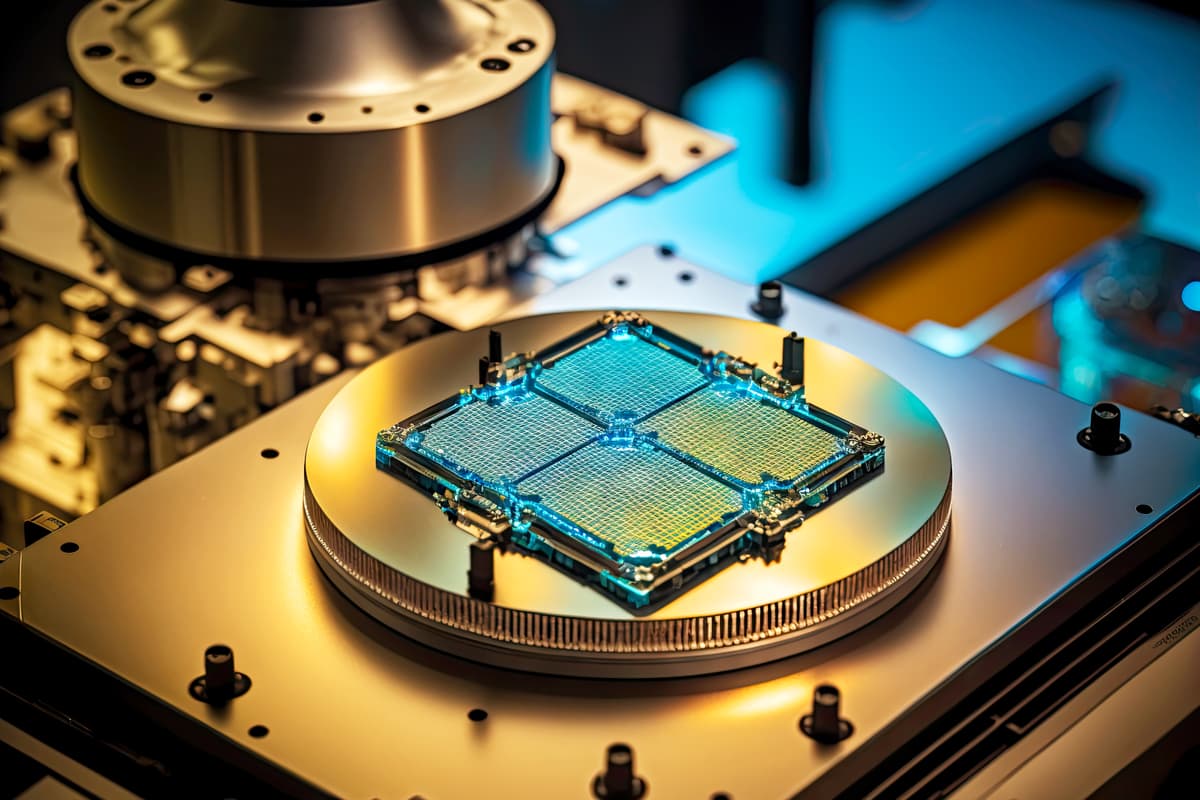
Quantum computers don’t just do the same things faster; they approach problems from a fundamentally different angle. They use quantum bits (qubits) that can exist in multiple states simultaneously (superposition) and can be intricately linked (entanglement).
This allows them to explore a vast number of possibilities at once, a principle that could be harnessed for specific, well-defined climate science problems.
Quantum Simulation of Molecular Processes
The most direct and promising near-term application is quantum simulation. Algorithms like the Variational Quantum Eigensolver (VQE) are being developed to calculate the ground-state energy of molecules—the foundation for understanding chemical reactions.
This is not merely theoretical; researchers at institutions like JPMorgan Chase & Co. and IBM have already published proof-of-concept studies simulating molecules like lithium hydride for battery research using VQE on real quantum hardware.
Optimizing Complex Climate Systems and Logistics
Beyond pure simulation, quantum computing excels at solving complex optimization problems. Climate action isn’t just about understanding the problem; it’s about orchestrating the solution on a global scale.
Quantum algorithms, such as the Quantum Approximate Optimization Algorithm (QAOA), could optimize massive, interconnected systems that are currently intractable. This capability could transform climate logistics, from designing optimal global grids for renewable energy to calculating efficient global carbon pricing mechanisms.
Key Quantum Algorithms for Climate Science
The hardware is only part of the story. The real power is unlocked by specialized software—quantum algorithms. Researchers are actively adapting and developing algorithms tailored for climate-related challenges, with a focus on robustness.
The Variational Quantum Eigensolver (VQE)
As mentioned, VQE is a leading candidate for near-term quantum advantage in chemistry. It’s a hybrid algorithm that uses a classical computer to guide a quantum processor in finding a molecule’s lowest energy state. Its design makes it somewhat resistant to the noise in current “noisy intermediate-scale quantum” (NISQ) devices.
Practical climate applications in development include modeling reactions in next-generation batteries for grid storage and studying novel photovoltaic materials.
Quantum Machine Learning for Pattern Recognition
Climate science generates petabytes of data from satellites, sensors, and models. Quantum machine learning (QML) algorithms aim to find patterns in this data more efficiently by mapping data into high-dimensional quantum feature spaces.
They could improve the downscaling of global models to regional levels, a critical need for local adaptation planning. One urgent application is the enhanced detection of subtle, early-warning signals of climate tipping points within noisy observational data.
The Current State and Near-Term Timeline
It is vital to temper excitement with realism. We are in the very early stages. Useful quantum computation for climate modeling is a marathon, not a sprint, but the first miles are being run through focused partnerships.
The NISQ Era and Hybrid Approaches
We are firmly in the NISQ era. Current quantum processors have limited qubits and are prone to errors. Therefore, the most impactful work for the next 5-10 years will involve hybrid quantum-classical algorithms, where a quantum chip handles a specific, complex sub-problem within a larger classical simulation.
Companies like IBM, Google, and startups are partnering with research institutions to run these hybrid experiments.
Roadmapping Toward Quantum Advantage
“Quantum advantage” for climate modeling—where a quantum computer solves a practical problem faster or more accurately than any classical computer could—is likely a decade or more away. The path requires more stable qubits (through error correction) and continued algorithm development.
Leading hardware roadmaps, such as those from IBM and Quantinuum, project the arrival of error-corrected, fault-tolerant quantum computers in the 2030s.
Timeframe Phase Expected Capabilities & Applications Present – 2025 NISQ Experimentation Hybrid algorithm testing on cloud QPUs. Proof-of-concept simulations for small molecules (e.g., LiH, H2O). Small-scale optimization problems. 2025 – 2035 Noisy Intermediate Scale Larger, more accurate molecular simulations for catalyst screening. Specialized quantum machine learning for data analysis. Optimization of mid-complexity systems (e.g., regional grid management). 2035+ Fault-Tolerant Era Full, accurate simulation of complex molecules (e.g., enzymes, novel PV materials). Large-scale, global climate system optimization. Potential for quantum advantage in core modeling tasks.
Practical Steps for the Climate Science Community
The transition to quantum-ready climate science won’t happen automatically. Proactive steps are needed today to prepare for tomorrow’s breakthroughs. Here are actionable recommendations:
- Education and Cross-Training: Graduate programs should offer introductory courses in quantum information science for climate scientists. Fostering a bilingual community is essential.
- Algorithm Development and Open-Source Software: Climate scientists should collaborate with quantum algorithm developers to define precise, impactful problem sets. Supporting open-source quantum software libraries is crucial for reproducible research.
- Access and Experimentation: Researchers should leverage cloud-based quantum computing platforms (IBM Quantum, Amazon Braket) to run small-scale experiments now, building institutional knowledge.
- Re-evaluate Problem Formulation: Start thinking about how core climate modeling challenges can be reframed as optimization or quantum simulation problems, identifying the “quantum sweet spots.”
Climate Challenge Classical Computing Approach Potential Quantum Computing Approach Molecular Simulation Density Functional Theory (DFT); approximations needed for large systems, limited accuracy. Quantum simulation (e.g., VQE); models electron interactions directly, potentially exact for larger molecules. Ensemble Forecasting Run hundreds of slightly different model simulations sequentially; extremely resource-intensive. Use quantum amplitude estimation to evaluate probabilities and uncertainties across many scenarios in parallel. Global System Optimization Heuristic algorithms (e.g., genetic algorithms); may get stuck in local optima for problems with billions of variables. Quantum optimization (e.g., QAOA); uses quantum effects to tunnel through barriers and search solution spaces more broadly. Climate Data Analysis Classical Machine Learning (CNNs, RNNs); effective but requires massive datasets and energy for training. Quantum Machine Learning (QML); may identify complex patterns in data with different feature representations, potentially more efficiently.
FAQs
Real, operational use in core climate prediction is likely 15+ years away. The near-term (next 5-10 years) will focus on “quantum utility”—using hybrid quantum-classical algorithms to solve specific, valuable sub-problems, such as simulating a key chemical reaction for carbon capture or optimizing a component of a renewable energy network. These incremental advances will build the foundation for future integration into full-scale models.
No, not for the foreseeable future. Quantum computers are specialized co-processors, not general-purpose replacements. They are expected to excel at specific types of problems (quantum simulation, complex optimization) that are exceptionally hard for classical machines. Classical supercomputers, advanced AI, and quantum processors will work together in a hybrid HPC+Quantum computing environment, each handling the tasks they are best suited for.
The twin challenges of qubit scale and error correction are the largest hurdles. Current NISQ devices have too few qubits and are too error-prone to perform long, complex calculations reliably. Achieving “fault-tolerant” quantum computation, where errors are continuously detected and corrected, is essential for large-scale climate applications. This requires millions of high-quality physical qubits to create a smaller number of stable “logical” qubits, a major engineering feat still in development.
Several accessible pathways exist: 1) Online Courses: Platforms like edX and Coursera offer introductory quantum computing courses. 2) Software Kits: Explore hands-on with open-source SDKs like Qiskit (IBM) or Cirq (Google), which have extensive tutorials. 3) Literature: Start with review papers in journals like Nature Reviews Physics or Quantum that focus on quantum for chemistry and optimization. 4) Workshops: Attend interdisciplinary workshops offered by research consortia like the Quantum Climate Institute or C2QA.
Conclusion
Quantum computing for climate modeling is not a magic bullet, but it is a potential game-changer. It represents a fundamentally new tool to tackle the twin challenges of incomprehensible system complexity and molecular-scale precision.
While fault-tolerant, large-scale quantum computers are on the horizon, the work of building the algorithms, partnerships, and expertise must begin in earnest today. The journey requires a clear-eyed view of both the transformative potential and the present-day limitations.
By strategically investing in this quantum-climate nexus, we can equip ourselves with a powerful new lens to understand our planet and safeguard its future. The most prudent path forward is one of parallel investment: aggressively improving classical models and AI while thoughtfully preparing for and integrating quantum advances as they mature.