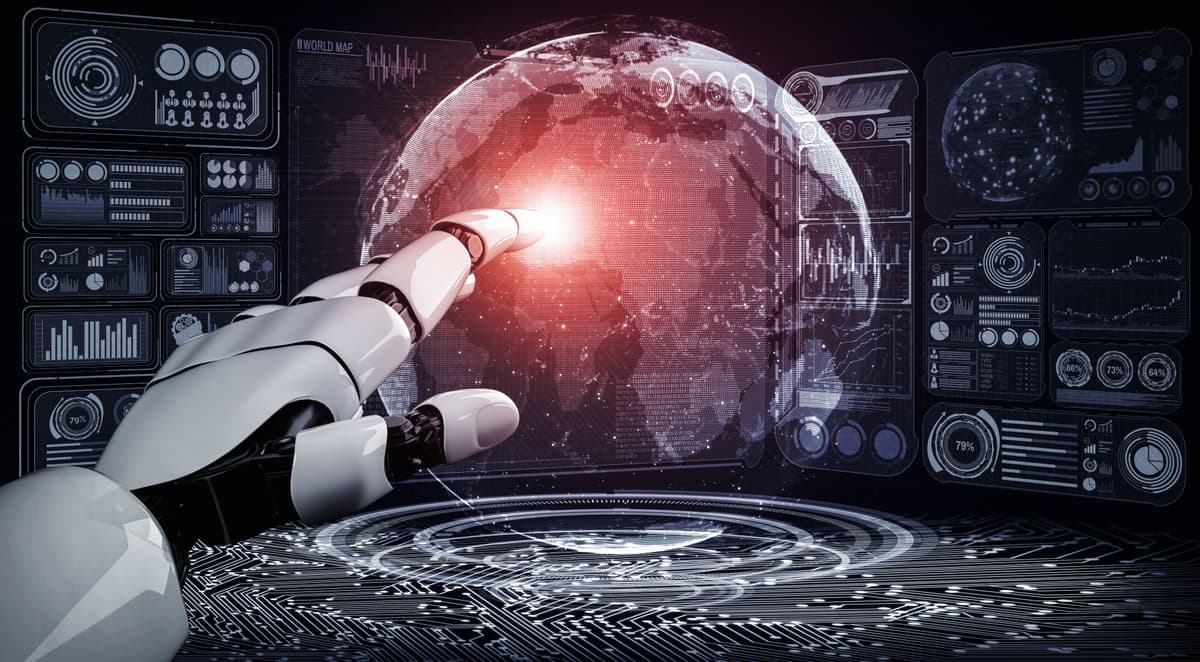

Artificial intelligence technology is reshaping our world at an unprecedented pace. From smartphones to self-driving cars, AI has become an integral part of our daily lives, transforming how we work, communicate, and solve problems. This revolutionary technology, rooted in machine learning and deep learning, is not just a buzzword but a powerful force that’s changing industries and society as a whole.
In this article, we’ll explore the evolution of AI technology and its impact on major industries. We’ll delve into the ethical considerations and challenges that come with these advancements, including issues related to privacy, job displacement, and decision-making processes. By examining both the potential benefits and risks of AI, we aim to provide a balanced view of how this technology is redefining our future and what it means for humanity.
The Evolution of AI Technology
The journey of artificial intelligence (AI) technology spans several decades, marked by significant milestones and breakthroughs. In the 1950s, the concept of AI emerged when Alan Turing envisioned machines capable of expanding beyond their original programming . This period saw the development of the first artificial neural network, SNARC, by Marvin Minsky and Dean Edmonds in 1951 .
The 1960s brought notable advancements, including the creation of ELIZA, the first chatbot, by Joseph Weizenbaum in 1966 . This decade also witnessed the development of Shakey, the world’s first mobile intelligent robot, which combined AI, computer vision, navigation, and natural language processing .
The field experienced ups and downs, with an “AI winter” in the 1970s due to funding cuts . However, the 1980s saw a resurgence, leading to the formation of the American Association of Artificial Intelligence . A significant breakthrough came in 1997 when IBM’s Deep Blue defeated world chess champion Gary Kasparov .
Recent years have seen rapid advancements in AI, including the development of sophisticated natural language processing models and AI-driven healthcare solutions . The integration of quantum computing with machine learning has led to the emergence of Quantum Machine Learning, opening doors to solving previously intractable problems .
AI’s Impact on Major Industries
Artificial intelligence (AI) is revolutionizing major industries, transforming how businesses operate and deliver value. In healthcare, AI has the potential to enhance patient care and improve diagnostic accuracy. AI powered tools can analyze large datasets and identify patterns, often surpassing human performance in several aspects of healthcare . For instance, algorithms are already outperforming radiologists at spotting malignant tumors .
In the financial sector, AI is reshaping operations and strategic horizons. GenAI’s capacity for creating original content is propelling banking toward a future of innovation and efficiency . Major banks, especially in North America, have made substantial investments in AI to spearhead innovation and enhance fraud detection mechanisms .
The manufacturing industry is also experiencing a significant transformation due to AI. The AI in manufacturing market size is projected to grow from USD 2.30 billion in 2022 to USD 23.60 billion by 2030, with a 31.1% CAGR . AI and robotics are enabling manufacturers to achieve more in less time and at a lower cost, automating repetitive tasks and improving quality inspection .
Ethical Considerations and Challenges
Artificial intelligence technology has raised significant ethical concerns and challenges. One major issue is the potential for AI to displace jobs. A survey spanning 44 countries revealed that nearly 30% of workers fear their jobs might be replaced by technology . In India, this concern is even more pronounced, with 74% of the workforce anxious about AI replacing their jobs . The impact is already evident, with 14% of workers experiencing job displacement due to AI .
Privacy is another critical concern. AI systems process vast amounts of personal information, blurring the line between utility and intrusion . The techniques used to gather data are often invisible to individuals, leading to potential breaches of privacy that are difficult to detect or control . These methods can result in unauthorized surveillance, identity theft, and loss of anonymity .
Conclusion
The rise of artificial intelligence has a profound influence on various aspects of our lives and industries. From healthcare to finance and manufacturing, AI is causing a revolution in how we work, make decisions, and solve complex problems. This technology’s potential to enhance efficiency and innovation is balanced by significant ethical concerns, including job displacement and privacy issues. As AI continues to evolve, it’s crucial to consider its far-reaching implications and work towards responsible development and implementation.
Looking ahead, the future of AI holds both promise and challenges. To harness its full potential while mitigating risks, we need ongoing dialog and collaboration among technologists, policymakers, and society at large. By addressing ethical concerns and fostering a human-centric approach to AI development, we can shape a future where this groundbreaking technology enhances human capabilities rather than replacing them. The AI revolution is here, and it’s up to us to guide its path to benefit humanity as a whole.
FAQs