
Introduction
Welcome to the neon-drenched, rain-slicked alleyways of the future. The cyberpunk aesthetic, born from the literary foundations of William Gibson’s Neuromancer and Ridley Scott’s cinematic landmark Blade Runner, is more than a genre. It’s a cultural lens, a design philosophy, and a stark reflection of our own technological anxieties and aspirations.
This guide illuminates the 20 essential aesthetics that construct this iconic world. From the oppressive grandeur of megacorporate architecture to the intimate, cluttered chaos of a hacker’s den, we explore the visual and thematic pillars that make cyberpunk so instantly recognizable. Whether you’re a creator, a fan, or simply curious, prepare to see the high-tech, low-life world in vivid detail.
The Urban Dystopia: Cityscapes of Control and Chaos
The cyberpunk city is a character in itself—a sprawling, vertical entity where the promise of the future collides with the decay of the present. It’s a visual representation of extreme social stratification. This environment is the primary stage where the core drama of power versus the individual unfolds.
Neon Noir & Rain-Slicked Streets
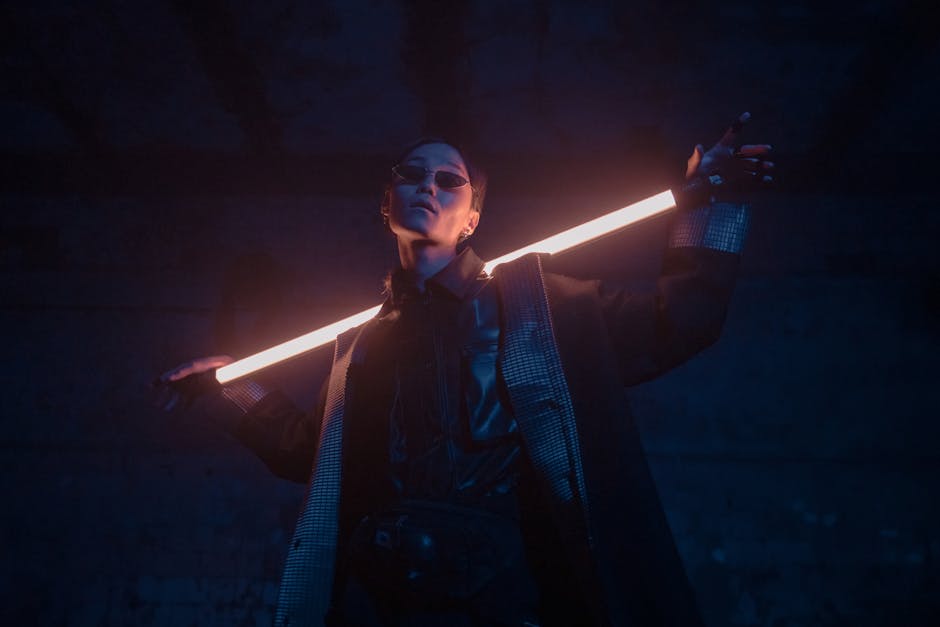
The most iconic cyberpunk image features endless night, illuminated by the cold glow of holograms and the warm buzz of neon. The perpetual rain isn’t just for atmosphere; it reflects the light, creating a world of shimmering color that hides grime and sin in equal measure. This aesthetic borrows heavily from film noir, using high-contrast chiaroscuro lighting to carve figures out of darkness.
Imperfection is key. The neon often flickers, signs are cracked, and light pools in oily puddles. The palette is dominated by electric blues, hot pinks, and acid greens, all cutting through a base of oppressive black. It’s a beautiful decay—a seductive warning that has become a standard reference from Ghost in the Shell to Cyberpunk 2077.
Megastructures & Vertical Slums
Look up, and you see the future: impossibly tall megastructures housing corporate elites. These buildings are sleek, monolithic, and imposing, their vast LED façades a constant reminder of who controls the narrative.
“The street finds its own uses for things.” – William Gibson, Burning Chrome. This quote perfectly encapsulates the adaptive reuse seen in the sprawl.
Now, look down. Beneath the spires lie the vertical slums—the “stacks” or “hives.” Architecture is an afterthought; a chaotic jumble of repurposed containers, corroded walkways, and exposed piping. This powerful visual metaphor makes altitude a direct indicator of wealth, critiquing real urban planning failures.
The Human Element: Augmentation and Identity
In cyberpunk, the boundary between human and machine is actively dismantled. The body becomes a site of customization, conflict, and corporate control, leading to profound questions about identity. This tension between enhancement and erosion of self is a central drama.
Cybernetic Enhancement & Bio-Mods
From functional prosthetics to full-body conversions, cybernetic augmentation is commonplace. The aesthetic ranges from sleek, seamless chrome to gritty, obvious scavenged parts that mark the user as someone who couldn’t afford the “good stuff.” This is the aesthetic of utilitarian modification.
Parallel to this is bio-modification: genetic tweaks and subcutaneous implants. The visual cues are more subtle—unnatural eye colors, bioluminescent skin markings, or the shimmer of nanites. These modifications speak to a desire to transcend human limits, often at a cost controlled by corporations, mirroring today’s debates around CRISPR gene-editing.
| Augmentation Type | Primary Aesthetic | Visual Cues & Social Implication |
|---|---|---|
| Corporate-Grade Cyberware | Sleek Chrome / Biotech | Seamless integration, glowing elements. Signifies wealth and corporate loyalty. |
| Street/Scavenged Cyberware | Gritty & Utilitarian | Exposed wiring, mismatched parts, visible screws. Signifies poverty and self-reliance. |
| Bio-Mods (Genetic) | Subtle & Organic | Iris color shifts, patterned skin, enhanced physique. Often a marker of elite status or underground experimentation. |
| Subdermal Implants | Hidden/Tech-Organic | Visible under skin only when active (LEDs, data ports). Blurs the line between body and device. |
Fashion as Rebellion: Techwear & Neo-Tribalism
In a surveilled world, fashion becomes a language of resistance. Techwear dominates: functional, multi-pocketed garments made from advanced synthetics. Think jackets with built-in AR interfaces and hoods that obscure faces from recognition software. The palette is often muted but accented with high-visibility straps or LEDs.
Contrasting this is neo-tribalism, where groups reclaim identity through eclectic, personalized styles. This involves blending traditional garments with high-tech elements, DIY 3D-printed accessories, or flamboyant club looks. It’s a vibrant, chaotic aesthetic that rejects corporate uniformity in favor of raw, human expression.
The Digital Realm: Data as Landscape
The cyberspace of cyberpunk is a visual representation of the global data network—a realm both beautiful and terrifyingly abstract. It is the battlefield for information, the most valuable currency, prefiguring modern concepts like the metaverse.
Cyberspace & The Data Fortress
Visualized as a vast, three-dimensional grid of light, cyberspace is a neon-lit architecture of pure information. Towers of glowing data represent corporate servers protected by “Intrusion Countermeasure Electronics (ICE),” appearing as shimmering walls or predatory creatures. Navigating this space requires a “console cowboy” to visualize their path.
The “Data Fortress” aesthetic visualizes security. It frames encryption as intricate, rotating mandalas of light and firewalls as cascading hexagons. It’s a sterile, mathematical beauty that is inherently hostile, drawing parallels to modern cybersecurity visualization tools.
Glitch Art & Digital Decay
Not everything in the digital world is pristine. The glitch aesthetic celebrates errors and system failures. Visually, this manifests as static overlays, color channel shifts, and fragmented geometry. It’s the look of a system under stress or a unique form of digital graffiti.
This ties into digital decay—the idea that even data can rot. Forgotten archives might be crumbling digital structures; corrupted files appear as sickly, pulsating masses of code. It’s a reminder that nothing lasts forever, echoing real-world concerns about digital preservation.
Practical Applications: Bringing Cyberpunk to Your Projects
Understanding these aesthetics is one thing; applying them is another. Here is a practical guide to incorporating cyberpunk elements into your own creative work, from writing to design.
- Start with a Mood Board: Collect images that embody specific aesthetics like “Neon Noir.” Use these to define your core visual palette and lighting.
- Layer the Old and New: Cyberpunk is defined by contrast. Place a sleek hologram next to peeling paint. This techno-vernacular approach creates immediate depth and history.
- Think in Layers (Verticality): Design your spaces with clear vertical stratification. Contrast elite spaces (clean, minimalist) with street-level clutter. This is core to environmental storytelling.
- Use Light as a Narrative Tool: Assign light colors to factions. Cold blue for corporations, warm neon for markets, harsh red for danger. Let the lighting tell part of the story.
- Detail is Key: Add “greebles” (small functional details) to technology. Add weathering to everything. Nothing should look factory-new unless it’s for the ultra-wealthy.
The Cultural Echo: Cyberpunk Beyond Fiction
The cyberpunk aesthetic has bled out of fiction to shape real-world design, technology, and social commentary. Its predictions and warnings are increasingly relevant.
Influence on Modern Design & Tech
You can see cyberpunk’s influence in the sleek, intimidating architecture of major tech campuses. The design of wearable tech and brain-computer interfaces often feels pulled from a cyberpunk prop department. The aesthetic of data visualization is a direct descendant of cyberspace.
Fashion brands have lines dedicated to “techwear,” and glitch art is a mainstay of digital marketing. Cyberpunk provided a visual vocabulary for the digital age that designers continue to mine for its evocative and predictive power.
A Lens for Social Critique
At its heart, cyberpunk is a warning. Its aesthetics make tangible our fears about corporate hegemony, loss of privacy, and social inequality. The “high-tech, low-life” dichotomy critiques late-stage capitalism. The pervasive surveillance state mirrors our debates about security and freedom.
“The future is already here – it’s just not evenly distributed.” – William Gibson. This axiom underpins the entire aesthetic, making it a powerful analytical tool.
By making abstract fears visually concrete, cyberpunk allows us to examine them more clearly. It asks us, through compelling imagery, what kind of future we are building and who it will truly serve. The aesthetic itself is the argument, providing a crucial framework for discussing AI ethics and digital rights.
FAQs
The most crucial element is contrast, often described as “high-tech, low-life.” It’s the juxtaposition of dazzling, advanced technology with gritty, decaying urban environments and profound social inequality. This visual and thematic tension is what defines the genre, making it a critique rather than just a celebration of the future.
While both explore the future, cyberpunk is a specific subgenre focused on the near-future impact of information technology, cybernetics, and megacorporations on society and the individual. Its aesthetic is deliberately dystopian, noir-inspired, and street-level, contrasting with the often clean, exploratory, or epic scale of traditional sci-fi.
Absolutely. Cyberpunk aesthetics are widely used in real-world domains like UI/UX design (for data dashboards and security software), architecture (creating layered, illuminated urban spaces), fashion (techwear), and music videos. The visual language effectively communicates themes of complexity, data flow, urban density, and technological integration.
The perpetual rain serves multiple purposes. Visually, it creates reflective surfaces that amplify neon and artificial light, enhancing the iconic glow. Thematically, it contributes to a sense of gloom, pollution, and perpetual decay. It also has a practical film noir heritage, obscuring details and adding a layer of mystery and melancholy to scenes.
Conclusion
The world of cyberpunk is built from 20 core aesthetics, each a piece of a larger mosaic depicting a future of dazzling innovation and profound dislocation. From neon-lit streets to abstract cyberspace, from the augmented body to rebellious fashion, these styles create a coherent, immersive, and critically engaged vision.
This aesthetic toolkit is a framework for understanding our present. As our world accelerates technologically, cyberpunk remains a vital, vibrant, and cautionary map of the terrain ahead, reminding us to always look for the human story glowing faintly beneath the neon.