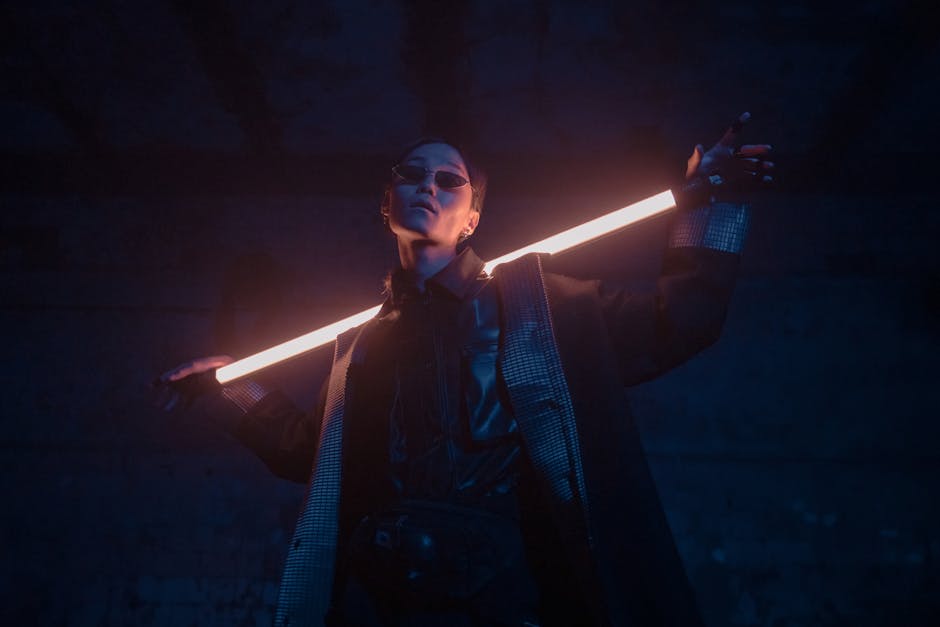

Introduction
In 1984, as the first personal computers entered homes, William Gibson authored a novel that would become the architectural blueprint for our digital consciousness. Neuromancer did more than tell a story; it forged the aesthetic and ethical language of a world yet to come. By visualizing cyberspace as a “consensual hallucination,” Gibson provided the foundational myth for the internet age. This article examines how his vision of a corporatized, digitally saturated future forecasted our technological trajectory and continues to define our relationship with the virtual world.
“The future is already here – it’s just not very evenly distributed.” — William Gibson. This insight reveals Gibson’s genius was not clairvoyance, but a profound synthesis of emerging trends into a coherent, compelling narrative that guided our collective imagination.
The Genesis of Cyberspace
Before browsers and URLs, Gibson conceived of a digital universe as a physical landscape. His “matrix” was a revolutionary idea: data given form, shape, and space. This conceptual leap transformed how we think about information, moving it from abstract code to an environment—a shift that directly enabled the intuitive, graphical internet we use today.
Coining the Digital Frontier
Gibson’s description of cyberspace as a “graphic representation of data abstracted from the banks of every computer” is a startlingly accurate preview of cloud computing and global data networks. He envisioned a unified, borderless information sphere decades before the World Wide Web became public infrastructure.
This vision resonated deeply with early internet architects. The concept of a universally accessible information space mirrors the founding principles of Tim Berners-Lee’s World Wide Web. Ultimately, Gibson’s fiction provided a tangible goal: to build the immersive, spatial data landscape he described, a pursuit now evident in fields like 3D data visualization and virtual collaboration platforms central to the cyberpunk aesthetic.
The Console Cowboys and Modern Hackers
The console cowboy archetype—a skilled digital outlaw navigating corporate “ice”—created the template for the modern hacker identity. This figure embodies the tension between individual agency and monolithic corporate power, a conflict that defines today’s digital landscape.
- Modern Parallel: The rise of “hacktivist” groups and the multi-billion-dollar cybersecurity industry.
- Actionable Insight: Gibson’s “ice” metaphorically predicted layered security models. Modern frameworks, like the NIST Cybersecurity Framework, formalize this into stages: Identify, Protect, Detect, Respond, and Recover.
This fictional duel between penetration and defense is now a daily reality for security operations centers worldwide, defending against attacks that mirror the novel’s high-stakes digital heists.
Virtual Reality and Bodily Transcendence
Neuromancer explored a core human desire: to transcend the limitations of the physical body. Gibson’s virtual reality was not for entertainment; it was a primary realm for work, identity, and conflict. This profound shift from physical to digital primacy is a central tension in our current technological evolution.
Jacking In: The Direct Neural Interface
The novel’s “jacking in” via a neural interface is its most iconic technological prediction. This concept of direct brain-to-network connection remains the ultimate goal for companies like Meta (with its metaverse) and Neuralink (with its brain-computer interfaces).
Current non-invasive BCI research, often focused on medical applications like restoring movement or communication, represents the first steps toward this vision. Furthermore, Case’s addiction to the matrix prefigured contemporary concerns about digital dependency and the psychological impact of immersive virtual environments, issues now addressed by researchers studying the effects of prolonged VR use on cognition and behavior.
The Dixie Flatline and Digital Consciousness
The character of the Dixie Flatline—a deceased hacker’s consciousness preserved on a ROM—introduced profound philosophical questions about identity and immortality. This concept directly precedes today’s ventures into AI legacy and digital personhood.
This raises a strategic question: If an AI can perfectly mimic your speech, memories, and personality based on your digital footprint, at what point does it challenge our definitions of life and legacy?
Companies now offer services to create AI chatbots from personal data, while research in neuromorphic computing seeks to replicate brain function. Gibson’s fiction framed the ethical debate we now face regarding autonomy, consent, and the nature of consciousness in a digital medium.
The Corporate Dystopia and Networked Power
Gibson’s future is ruled not by governments, but by sovereign, family-owned mega-corporations like Tessier-Ashpool. This shift in power dynamics—from geopolitical borders to corporate networks—has become a defining reality of the 21st-century global economy.
Data as the Ultimate Currency
In Neuromancer, the most coveted asset is information. The plot hinges on data theft, a premise that underpins our entire digital economy, where data aggregation and monetization drive the world’s most valuable companies.
- Statistic: The global data analytics market is projected to exceed $650 billion by 2029, underscoring information’s supreme economic value.
- Example: Corporate and state-sponsored cyber-espionage, detailed in annual reports by firms like CrowdStrike, mirrors the novel’s shadowy data wars exactly.
Gibson understood that in a networked world, control over information flows equates to ultimate power, a principle now visible in debates over data sovereignty and platform governance.
The Aesthetic of Decay and Glitz
The iconic “high-tech, low-life” aesthetic is cyberpunk’s definitive visual heartbeat. It captures the paradox of advanced technology existing alongside social decay—a contrast evident in modern cities where smartphone ubiquity coexists with infrastructure inequality.
This aesthetic is not just a style; it’s a critical lens. It forces us to question who benefits from technological progress. The sprawling, anonymous megacity of the “Sprawl” reflects our modern experience of networked individualism, where digital connectivity can exacerbate physical community fragmentation, a dynamic analyzed by sociologists studying the digital age.
Key Predictions vs. Modern Reality
| Neuromancer Concept (1984) | Modern Reality / Technology | Impact & Evolution |
|---|---|---|
| Cyberspace / The Matrix | The Internet, Cloud Platforms, Metaverse Prototypes | Became the foundational metaphor for our online experience. |
| Console Cowboys | Cybersecurity Professionals, Bug Bounty Hunters, Hacktivists | Professionalized the rogue hacker archetype into a legitimate industry. |
| Direct Neural Interface | VR/AR Headsets, Research-stage BCIs (e.g., Synchron, Neuralink) | The pursuit of immersion drives billions in R&D investment. |
| ICE (Security) | Next-Gen Firewalls, Zero-Trust Architecture, AI-Powered Threat Detection | Digital defense is now a dynamic, intelligent process. |
| ROM Constructs | Generative AI Chatbots, Digital Memorialization Apps | Raises urgent ethical questions about posthumous digital identity. |
| Sovereign Mega-Corps | Big Tech (Alphabet, Amazon, Apple, Meta, Microsoft) | These entities wield influence rivaling nation-states. |
| Implants & Biochips | Wearable Tech, Implantable RFID Chips, Biometric Monitoring | The line between body and technology is actively blurring. |
Note: This table illustrates conceptual and cultural parallels. Gibson’s accidental use of “Microsoft” for a bio-chip highlights how his ideas permeated the tech industry’s naming and imagination.
| Aspect | 1980s Cyberpunk (Neuromancer) | 2020s Reality & Aesthetic |
|---|---|---|
| Urban Environment | Megacities (The Sprawl), dense, vertical, perpetually rainy. | Smart cities, LED urban landscapes, digital billboards, gentrified tech hubs. |
| Fashion | Mirrorshades, leather, synthetic fabrics, functional punk. | Techwear, smart fabrics, integrated LEDs, utilitarian fashion with digital elements. |
| Interface Design | Green monochrome CRT text, chunky hardware, physical jacks. | Minimalist flat design, holographic UI concepts, voice/gesture control, sleek wearables. |
| Social Structure | Stark class divide: corporate elites vs. street-level hustlers. | Digital divide, gig economy precarity vs. tech billionaire wealth, influencer culture. |
The Lasting Cultural Impact
The true legacy of Neuromancer is its deep cultural programming. It provided the narrative framework—the heroes, villains, and visual grammar—for the digital revolution. It inspired not just artists, but the engineers who built our world.
“The street finds its own uses for things.” — William Gibson. This quote encapsulates the unpredictable, grassroots adaptation of technology, a phenomenon visible in everything from meme culture to the repurposing of social media platforms for activism.
From the cinematic language of The Matrix to the narrative depth of games like Cyberpunk 2077, its influence is ubiquitous. More critically, it inspired pioneers like the founders of the Electronic Frontier Foundation to fight for digital rights. The novel serves as a perpetual cautionary tale and a source of inspiration, ensuring that as we build the future, we continually revisit Gibson’s vision to understand the soul of the machines we create.
FAQs
Cyberpunk is more relevant than ever. While its 1980s aesthetic evokes nostalgia, its core themes—corporate dominance, digital identity, AI consciousness, and the blend of high-tech with societal inequality—are defining issues of the 2020s. The genre has evolved into “post-cyberpunk” and “solarpunk,” reflecting contemporary anxieties and hopes about technology’s role in our future.
The most profound and accurate prediction is the concept of “cyberspace” itself as a universally accessible, immersive data landscape. This became the foundational metaphor for the World Wide Web, cloud computing, and virtual worlds. While specific tech like neural jacks isn’t here, the social and experiential reality of living a significant part of our lives in a digital “matrix” is precisely what Gibson forecasted.
The novel directly inspired early innovators in computing and the internet. Many pioneers in virtual reality, cybersecurity, and digital rights activism cite Gibson’s work as a formative influence. It provided a shared vocabulary and a compelling vision that helped rally talent and investment toward building the interconnected digital world we inhabit today.
Cyberpunk is “high-tech, low-life,” focusing on a near-future dystopia dominated by digital technology, megacorporations, and urban decay (e.g., neon, rain, implants). Steampunk is retro-futurism, imagining a past (often Victorian) where advanced technology is powered by steam and clockwork, featuring brass, gears, and a sense of adventure. One looks forward, the other looks back.
Conclusion
William Gibson’s Neuromancer achieved a rare feat: it invented a lens through which we view technological progress. Its prophecy lies not in precise technical specs, but in its flawless anticipation of how digital saturation would reshape society, identity, and power. We navigate his “consensual hallucination” daily through social media, digital finance, and virtual workspaces.
The novel remains an essential tool, challenging us to confront the ethical dimensions of our connected lives. It reminds us that the future is a story we are all actively writing. To navigate the complexities of AI, data privacy, and virtual existence, one must first understand the world Gibson dared to imagine and its enduring aesthetic principles.