Introduction
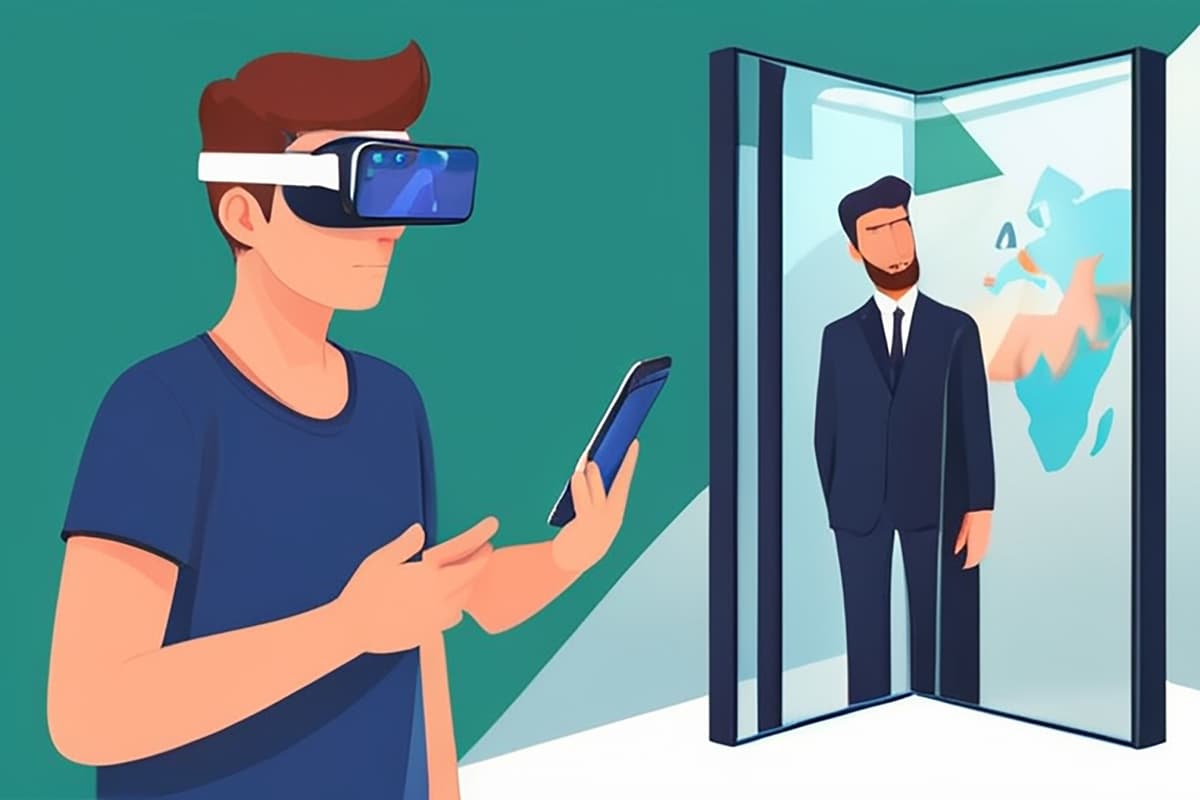
The postcard is a fading memory. The future of travel isn’t about simply seeing a place; it’s about living its story. We stand at the precipice of a revolution where the digital and physical worlds coalesce, creating immersive narratives that transform tourists into active participants. This is the promise of Mixed Reality (MR) in tourism—a seamless blend of Augmented Reality (AR) and Virtual Reality (VR). For the modern traveler and forward-thinking operator alike, MR is the critical step from passive observation to profound, personalized participation.
This article explores how MR is blending worlds to resurrect history, reimagine destinations, and redefine the very essence of the journey as part of a broader look at 20 future tech applied to tourism.
“The most profound technologies are those that disappear. They weave themselves into the fabric of everyday life until they are indistinguishable from it.” – Mark Weiser, father of ubiquitous computing. This vision is becoming reality in tourism through MR.
Beyond the Screen: From Augmentation to True Integration
Current “tech in tourism” often involves looking at a device. MR aims to make the device invisible, integrating information directly into your field of vision. This is a fundamental shift from guided tours to guided experiences, moving from 2D screens to 3D spatial interactions anchored in our world.
The AR Foundation: Contextual Overlays Come Alive
While basic AR apps translate menus, next-generation MR uses spatial computing to understand depth and surfaces. Imagine pointing your glasses at the Roman Forum and watching a fully rendered senator walk behind a real ruin, his speech audible only to you. The overlay is context-aware, persistent, and interactive.
This turns every historical site into a living diorama and every street into an interactive gallery. Real-time translation can be projected onto signs, while restaurant reviews float above a bistro’s entrance. The environment becomes a responsive, intelligent interface, reducing friction and increasing engagement.
The VR Component: Pre-Travel Immersion and Impossible Journeys
VR’s role in MR tourism is twofold: a powerful planning tool and a gateway to inaccessible experiences. Before booking a safari, travelers can take a 360-degree VR tour of the lodge, a practice shown in research to increase booking confidence and reduce uncertainty. More powerfully, MR uses VR segments for “impossible tourism.” Stand on a skyscraper deck and be transported to the same spot 100 years ago. Or, at a conservation center, experience a coral reef before bleaching. These curated VR moments within a physical experience are the hallmark of sophisticated MR.
Resurrecting History and Reimagining Landmarks
MR finds a compelling application in bringing static sites back to life. It solves the classic tourist dilemma: staring at a crumbled wall and struggling to imagine its former glory. MR provides the imagination, grounded in research.
Time Travel at Historical Sites
Historical locations are perfect for MR layering. At a medieval castle, visitors could witness a digital jousting tournament or hear spatialized whispers in the corridors. Archaeologists can share 3D reconstructions of artifacts in their original locations.
The technology also allows for sensitive storytelling. Sites with difficult histories can use MR to present nuanced narratives, incorporating testimonies and commentary directly into the landscape, fostering reflection rather than simple sightseeing.
Dynamic Interpretation of Natural Wonders
The application extends to natural landmarks. Gazing at the Grand Canyon, an MR experience could visualize the geological forces that carved it over millennia. On a whale-watching tour, glasses could highlight distant wildlife and show sonar-derived underwater views.
This deepens appreciation by revealing hidden stories and scientific processes, transforming a scenic view into a dynamic lesson. Contextual data dramatically increases visitors’ dwell time and recall of educational content.
The Hyper-Personalized Journey
Mass tourism is giving way to personalized travel. MR is the ultimate tool for customization, allowing each journey to be tailored in real-time to the interests, pace, and preferences of the individual.
Adaptive Itineraries and Interest-Based Pathways
An MR system can learn a traveler’s preferences through gaze-tracking. Are you spending more time looking at Baroque architecture? The system can subtly suggest a detour to a lesser-known church. Interested in culinary history? Highlights could appear over market stalls selling traditional ingredients.
This also aids accessibility. Visitors with mobility challenges can be routed along accessible paths. Those with hearing impairments can have audio converted to real-time subtitles. Language barriers dissolve, elevating the guide’s role to that of an experience facilitator.
Social Sharing and Collaborative Experiences
Future MR tourism will be inherently social. Travel companions using shared MR sessions could see the same digital artifacts, enabling shared wonder. You could leave a digital “note” at a favorite café for friends who visit later.
On group tours, a guide could “push” specific visualizations to all participants simultaneously. This creates a new layer of shared memory and collaborative exploration, blending the social joy of travel with cutting-edge technology.
Practical Implementation for the Tourism Industry
Adopting MR is a strategic decision that requires careful planning. Here is a roadmap for destinations and businesses:
- Start with a Story, Not a Gadget: Identify the untold or hard-to-tell stories at your site. The tech should serve the narrative, not drive it. Conduct audience research first.
- Pilot with Targeted Experiences: Begin with a single, high-impact MR experience—a 10-minute historical recreation. Use durable, user-friendly hardware and ensure robust connectivity.
- Ensure Seamless Integration: The experience must be easy to start and intuitive. QR code activation, clear signage, and on-site “experience ambassadors” are crucial for adoption.
- Layer Your Offerings: Provide a base physical experience, an AR-enhanced layer via a smartphone app, and a premium, full-immersion MR tour. This caters to different comfort levels and budgets.
- Collect Data Responsibly: Use anonymized engagement data to refine the experience, always prioritizing user privacy and transparency. Clearly communicate your data policy.
| Technology | Core Experience | Tourism Use Case | Hardware Example | Key Differentiator |
|---|---|---|---|---|
| Augmented Reality (AR) | Digital overlay on the real world via a screen. | Menu translation, basic landmark info pop-ups. | Smartphone, Tablet | Screen-dependent; lacks environmental interaction. |
| Virtual Reality (VR) | Fully immersive digital environment. | Virtual site tours, pre-travel “try-before-you-buy.” | VR Headset (Meta Quest Pro, HTC Vive) | Blocks out physical world; fully synthetic. |
| Mixed Reality (MR) | Interactive digital objects anchored in and responding to the real world. | Historical figures walking beside you, interactive art on buildings, personalized guided narratives. | MR Glasses (Microsoft HoloLens, Magic Leap, Apple Vision Pro) | Digital objects interact with and are occluded by real-world geometry. |
Ethical Considerations and Future Challenges
As we blend these worlds, we must navigate new complexities. Digital overlays could lead to visual clutter or “experience pollution,” necessitating digital zoning rules. There’s a risk of creating a divisive “two-tier” tourism based on who can afford the hardware.
“The greatest challenge is ensuring MR enhances our connection to the real place, rather than replacing it with a distracting digital facade.” – Dr. Sarah Kennedy, Director of the Center for Responsible Tourism at Stanford. This requires deliberate design focused on complementarity.
Furthermore, the curation of history through MR carries great responsibility. Who controls the narrative? Ensuring historical accuracy and cultural sensitivity through academic and community partnerships is paramount. The industry must develop ethical guidelines for MR content creation. Data security and user privacy are non-negotiable, requiring enterprise-grade encryption and clear opt-in controls. The UNWTO Global Code of Ethics for Tourism provides a crucial framework for considering these impacts as technology evolves.
FAQs
While both overlay digital content on the real world, standard AR (like on a smartphone) is screen-based and the content doesn’t truly interact with the environment. MR uses advanced hardware (like glasses) to anchor digital objects in 3D space, allowing them to be occluded by real objects and respond to the user’s physical surroundings, creating a more seamless and interactive experience.
Yes, MR has significant potential to enhance accessibility. It can provide real-time captioning for audio guides for the hearing impaired, offer visual or haptic navigation cues for the visually impaired, and create adaptive itineraries that suggest accessible routes for visitors with mobility challenges, making experiences more inclusive.
Starting small is key. Begin by identifying one compelling story at your site. Instead of investing in expensive hardware upfront, consider developing a sophisticated AR experience via a smartphone app as a pilot. Partner with a local tech developer or university. You can then offer a premium, guided MR tour using rented or shared hardware for a higher-tier ticket, testing demand before a full-scale rollout.
The primary barriers are cost (of both creating content and purchasing hardware), the need for reliable high-bandwidth connectivity on-site, and user adoption comfort. There’s also a significant challenge in creating high-quality, accurate, and engaging content that justifies the use of the technology, moving beyond novelty to provide genuine value. A report by the McKinsey Travel, Logistics & Infrastructure practice highlights technology integration as a key factor in future tourism resilience.
| Tourism Metric | Traditional Tourism | With MR Integration | Potential Benefit |
|---|---|---|---|
| Visitor Engagement | Passive observation, limited interaction. | Active participation, interactive storytelling. | Increased dwell time, deeper emotional connection. |
| Educational Value | Static signs, pre-recorded audio. | Dynamic, contextual visualizations and data. | Improved information retention and understanding. |
| Personalization | One-size-fits-all tours. | Adaptive itineraries based on real-time interest. | Higher customer satisfaction and perceived value. |
| Off-Peak/Seasonal Appeal | Limited offerings in low season. | “Impossible” or weather-independent MR experiences. | Extended tourism season, revenue smoothing. |
“Implementing MR is not a technology project; it’s a guest experience project. The goal is to create moments of magic that couldn’t exist without the tech, but feel utterly natural to the visitor.” – A leading experience designer for heritage sites.
Conclusion
Mixed Reality represents the next evolutionary leap in tourism. It moves us beyond observation to immersion, beyond generic tours to personalized journeys, and beyond static sites to living stories. It holds the power to make travel more engaging, educational, and memorable.
For the traveler, it promises adventures where every corner holds a discovery. For the industry, it offers a tool to manage visitor flow and create sustainable, high-value experiences. The worlds are blending. The question is no longer if destinations will participate, but how they will shape this new reality to tell their unique story responsibly and inclusively. The next step begins with imagining the layers of possibility waiting to be revealed—and then building them with care and respect for the real world they enhance, a core theme explored in the book Betechit: 20 Future Tech Applied to Tourism.