
Introduction
Step into a world defined by rain-slicked neon, monolithic corporate towers, and the low hum of aging technology. Cyberpunk, born from the speculative fiction of authors like William Gibson, has evolved from a literary genre into a pervasive visual and philosophical language. As a visual designer, I see its power not as nostalgia, but as a prescient reflection of our reality.
This exploration delves into the 20 core aesthetics that define cyberpunk. We will unpack why this retro-future vision remains an essential lens for viewing our own age of surveillance capitalism, digital identity, and technological disparity.
“The street finds its own uses for things.” – William Gibson, Burning Chrome. This iconic quote encapsulates the cyberpunk ethos: the subversive, user-driven adaptation of technology against the intentions of its creators.
The Neon-Drenched Urban Landscape
The cyberpunk city is a central character—a sprawling, vertical, and perpetually wet metropolis. This environment is a physical manifestation of social inequality and information overload, drawing from real-world architectural movements and the dense urbanism of modern Asia.
The Rain-Slicked Megacity
Endless rain glistens on asphalt, reflecting the garish glow of polyglot neon signs. Cinematically codified by Blade Runner, this aesthetic creates a sense of perpetual gloom and atmospheric density. The rain doesn’t cleanse; it emphasizes grime and decay, symbolizing the moral ambiguity and environmental neglect of a hyper-industrialized world.
Architecture showcases “collapsed time,” where ancient structures sit beneath the shadows of corporate skyscrapers. This clash, inspired by cities like Shanghai, represents the uneven distribution of progress. A cutting-edge biotech clinic may operate directly above a street market selling salvaged electronics, illustrating “trickle-down technology” in its most literal, spatial form.
Neon Noir & Artificial Light
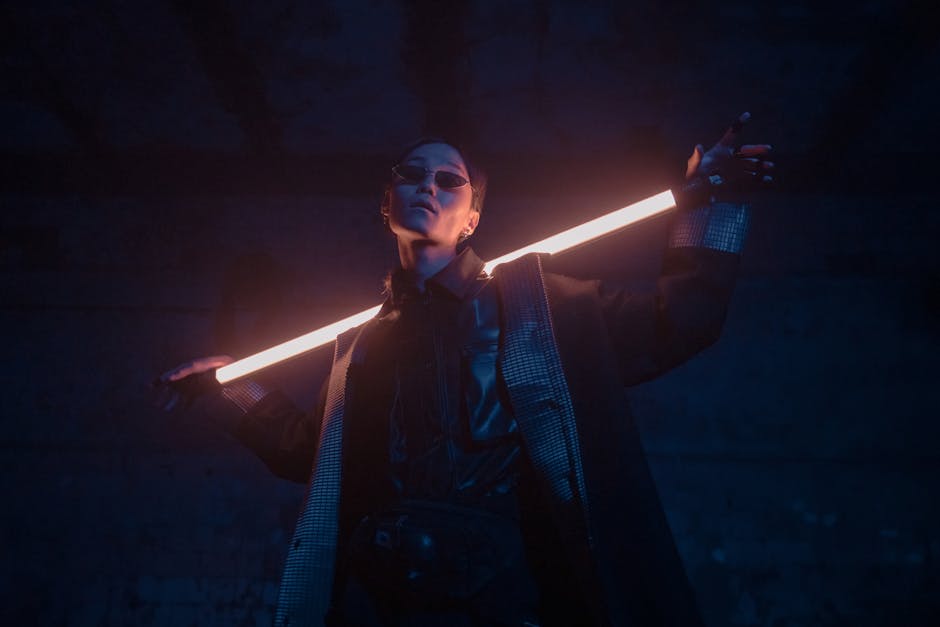
Natural light is extinct. The world is bathed in the cold glow of neon, holograms, and flickering fluorescents, creating a high-contrast visual style of deep shadows and vivid color pools. This directly borrows chiaroscuro techniques from 1940s film noir, injecting narratives with cynicism and moral ambiguity.
This lighting is both informational and oppressive. Consider the real-world phenomenon of Seoul’s massive digital billboards, scaled into dystopia. Holographic ads become aggressive data streams. In design, color theory is crucial: cool blues isolate corporate zones, while warm neons energize yet claustrophobically contain street markets.
The Aesthetics of the Body & Identity
In cyberpunk, the human body is a platform for modification and control. The line between organic and synthetic is blurred, raising urgent questions about agency, personhood, and the price of enhancement.
Cybernetics & Grunge Tech
This is the aesthetic of visible, unpolished augmentation. Unlike sleek sci-fi, cyberpunk embraces “grunge tech”: exposed wiring, scuffed metal, and functional gear that looks lived-in. It highlights a DIY ethos versus corporate sterility, as seen in Cyberpunk 2077.
The aesthetic fuels a central philosophical debate: at what point does enhancement erase the self? Modern parallels are no longer fiction. From advanced neural-link research to biohacking communities, this aesthetic is becoming documentary. It forces us to ask: are we upgrading humanity or creating a new class divide based on augmentation access?
Digital Personas & Data Fragmentation
Identity explodes beyond the physical into the digital realm. This is visualized through glitch art, data-moshing, and low-resolution avatars—techniques pioneered by artists like Rosa Menkman. This digital decay symbolizes the fragility of the online self.
Fashion physically embodies this fragmentation. Clothing features circuit-board patterns or materials that disrupt facial recognition. Masks and goggles are both style and a defense against surveillance. This directly mirrors our current crisis, where most feel they have little control over their collected data. Cyberpunk fashion is the armor for this reality.
The Technology of Control & Rebellion
The tools of cyberpunk are instruments of power, wielded by both oppressor and rebel. The aesthetic marries the analog past with the digital future, highlighting a tension between transparent control and subversive understanding.
Retro-Futurism & Analog Interfaces
Despite its advanced themes, the technology feels tactile and 80s-inspired: bulky CRT monitors, green-on-black displays, and physical data slugs. This “high-tech, low-life” aesthetic grounds the future, making it feel hackable and tangible compared to today’s sealed devices.
This analog resistance has real-world merit. In an age of cloud dependency, physical interfaces represent autonomy. Security experts consistently rank air-gapped systems among the most secure. Cyberpunk’s love for plugging in a cord is a metaphor for retaining direct control in a black-box technological era.
Hacker Dens & Underground Tech
Contrasting sterile corporate labs, the rebel’s tech is cobbled from salvage. The hacker’s den is a nest of mismatched monitors and exposed server racks—a cathedral of brilliant chaos. Wires are everywhere, symbolizing direct, unmediated connection.
This space is both sanctuary and weapon. It’s where decentralized skill challenges centralized power. This mirrors real-world innovation ecosystems like Maker Spaces and Open-Source Software projects. The aesthetic romanticizes the truth that ingenuity often flourishes in clutter, not clean rooms.
Cultural Fusion & Global Dystopia
Cyberpunk predicted a globalized yet fractured world. Its aesthetic is a deliberate pastiche, primarily drawing from East Asian influences to create a future that feels familiar yet disorienting.
East-Meets-West Urban Sprawl
The classic cityscape fuses American film noir with East Asian urban density. Japanese kanji and Chinese hanzi dominate signage alongside English, reflecting a shifted economic hegemony. This fusion often depicts cultural signifiers stripped of meaning and repackaged as aesthetic commodities.
This creates a textured reality: a Shinto gate standing before a synthetic protein dispensary, or a family-run noodle bar squeezed between mega-corporate plazas. It visualizes a future where globalization creates a layered, contradictory urban collage.
The Aesthetic of Corporate Dystopia
Power is visualized through branding, not flags. Omnipresent logos crown skyscrapers; personalized, intrusive ads form the visual landscape. Architecture is coldly imposing, employing Brutalist principles designed to intimidate.
This creates a world where citizenship is consumerism. Your value is your credit rating. The constant visual pollution of ads is a reminder of pervasive power. As outlined in The Age of Surveillance Capitalism, the dystopia is a gilded cage of consumption and data extraction—a reality cyberpunk aesthetics made visible decades ago.
Key Elements to Incorporate in Your Own Cyberpunk Creations
To authentically capture cyberpunk, move beyond surface-level neon. Integrate these actionable elements to build worlds with depth and critical resonance:
- Master the Lighting: Use high-contrast scenes dominated by artificial light. Embrace deep shadows and colored glows. Study the cinematography of Blade Runner 2049 to understand how light directs emotion.
- Embrace Texture and Decay: Combine sleek surfaces with grunge. Add environmental noise: rain, steam, static. Use layered texturing to ensure nothing looks pristine.
- Fuse the Old and New with Purpose: Place retro tech next to advanced concepts like holograms. When using cultural fusion, conduct research to move beyond appropriation into thoughtful commentary.
- Focus on the Human-Machine Interface: Design visible cybernetics and data ports. Show the physicality of interaction—plugging in a neural jack. This emphasizes vulnerability in a digital world.
- Tell a Story of Stark Contrast: Visually juxtapose extreme wealth and poverty, spiritual icons and blatant ads. Build the genre’s core socio-economic conflict directly into your environment design.
| Aesthetic of Control | Aesthetic of Rebellion | Real-World Parallel |
|---|---|---|
| Sleek, seamless corporate architecture | Grunge tech & exposed wiring | Apple Store vs. Maker Space |
| Omnipresent holographic advertising | Glitch art & data-moshing | Targeted ads vs. Ad-blocking/VPN use |
| Biometric surveillance systems | Fashion that disrupts recognition (masks, reflective materials) | Facial recognition in public spaces |
| Black-box, user-proof devices | Analog interfaces & repurposed salvage | Sealed smartphones vs. Right-to-Repair movement |
“The future is already here — it’s just not very evenly distributed.” – William Gibson. This observation is the socio-economic engine of cyberpunk, explaining the visual clash of staggering wealth and desperate poverty.
FAQs
Cyberpunk is profoundly relevant. While its visual language was codified in the 1980s, its core themes—surveillance capitalism, corporate hegemony, digital identity, and the human-machine interface—have become our daily reality. It serves as a critical framework, not just a nostalgic aesthetic, for analyzing technological society.
“High-tech, low-life” is cyberpunk’s defining principle. Unlike the clean, optimistic futurism of Star Trek or the aristocratic drama of space operas, cyberpunk focuses on the street-level impact of technology in a decaying society. It emphasizes dirt, wear, and the human cost of advancement, creating a grounded, morally complex world.
Move beyond using scripts and icons as mere exotic backdrop. Engage in research to understand the cultural context. Aim for thoughtful fusion that comments on globalization, rather than appropriation. Incorporate elements with purpose—for example, showing traditional practices persisting under corporate oversight—to add narrative depth instead of superficial styling.
Analog tech (CRTs, wires, physical media) serves multiple purposes. Narratively, it represents a tangible, hackable technology versus today’s opaque “black boxes.” Thematically, it highlights “collapsed time,” where the past and future coexist. Aesthetically, it provides gritty texture and a sense of history, reinforcing the “low-life” aspect of the world.
Conclusion
The 20 aesthetics of cyberpunk form an enduring vision because they are not mere predictions of tech, but profound commentaries on its human cost. The neon, rain, chrome, and grime are visual metaphors for our anxieties about unchecked corporate power and the erosion of privacy.
Our continued obsession stems from a chilling realization: the dystopian mood of 1980s cyberpunk has become a diagnostic tool for the 21st century. It endures because it provides a compelling, stylish, and critically rigorous framework to process our complex relationship with a world where technology accelerates inequality as fast as innovation. The future arrived; cyberpunk gave us the vocabulary to see it clearly.